Hearing and Your Brain: A Gentle Look at One of the Most Treatable Risks
When we think about looking after our memory, we usually picture puzzles, good food and a decent night's sleep. One of the most treatable factors rarely makes the list at all — our hearing. It turns out the ears and the brain are more connected than we tend to assume, and that is quietly hopeful news.
If you have noticed conversations becoming harder work — asking people to repeat themselves, turning the television up, struggling to follow a chat in a busy café — this is worth a few calm minutes.
What the research suggests
Hearing loss becomes more common as we get older, and researchers now consider it one of the largest modifiable risk factors for later memory problems. Modifiable simply means it is something we can often do something about — which is exactly the encouraging part.
Two recent findings are worth knowing. In a large three-year trial known as ACHIEVE, nearly a thousand adults aged 70 to 84 with untreated hearing loss were followed closely. Among those who were already at higher risk of cognitive decline, treating hearing loss with hearing aids slowed their cognitive change by about half compared with a control group. In the broader, healthier group the effect was small — so this is promising, especially for people at higher risk, rather than a guarantee for everyone.
A separate 2026 study published in the journal Neurology added another piece. It found that regular hearing-aid use was linked to a lower risk of dementia and cognitive impairment — even though, in the short term, it did not change scores on memory tests. The honest summary really was this: the tests did not jump, but the longer-term risk looked lower.
Why hearing might matter to the brain
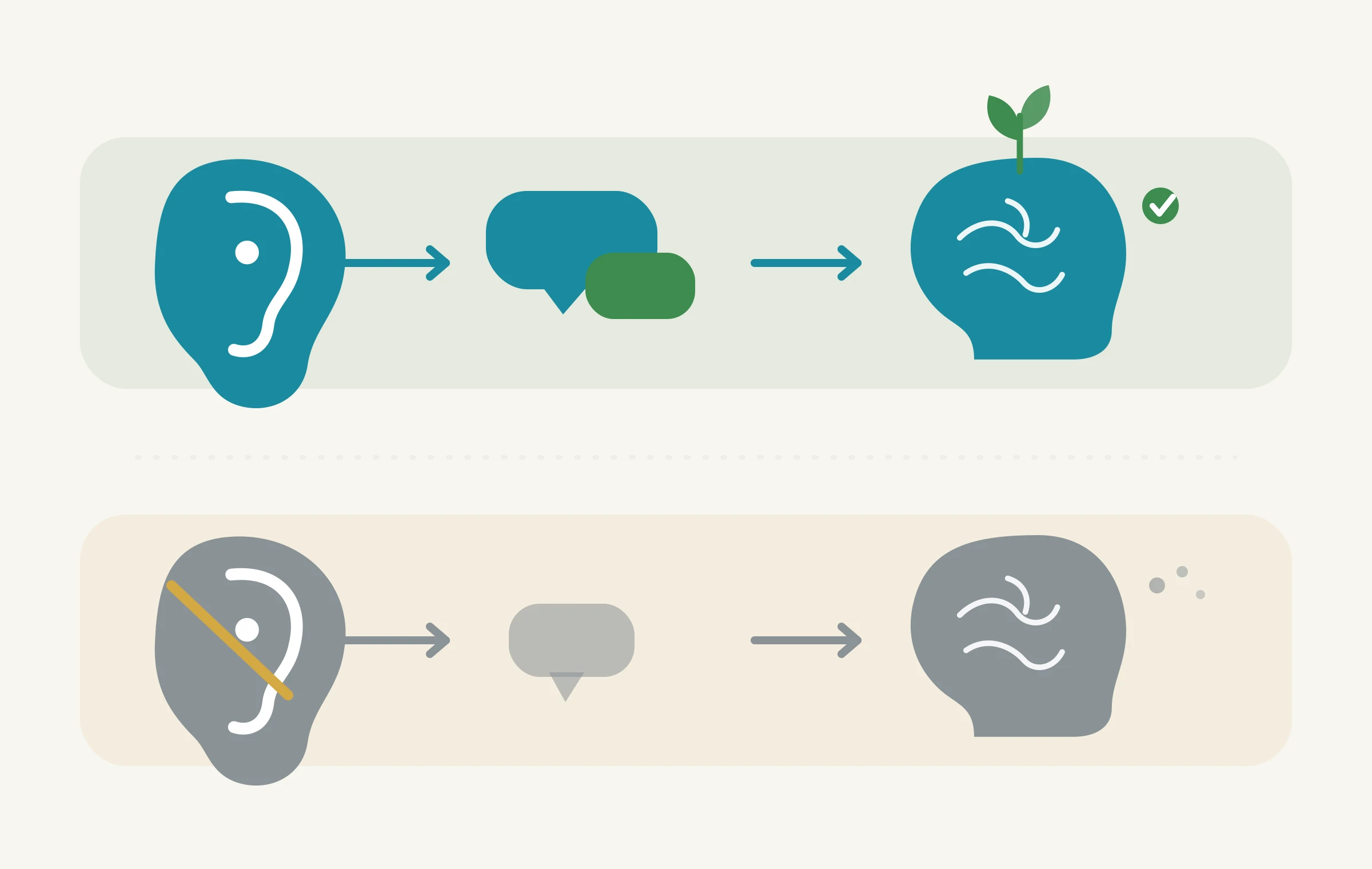
The leading explanation is gentle and very human. When sounds are hard to follow, conversations become tiring. Bit by bit, we lean out — we join in less, we go out less, and the brain receives less of the everyday stimulation it quietly thrives on. Straining to hear may also use up mental effort that could go elsewhere, and reduced hearing is closely tied to feeling socially isolated.
None of this means hearing loss alone causes memory problems. It is more that our hearing shapes how connected and engaged we stay — and connection and engagement are good for the brain.
Gentle steps you can take
None of this needs to be dramatic. A few calm, practical things line up with the research:
- If conversations have become hard work, consider booking a hearing check — it is simple, and often free.
- If you have been offered hearing aids, give them a fair chance; the benefit tends to grow as you get used to them.
- Keep leaning into conversation — shared meals, a phone call, a club or class you enjoy.
- In noisy places, sit where you can see faces and lower the background noise where you can.
- Look after the basics that protect hearing, like keeping headphone volume moderate.
An honest caveat
One trial or study, however careful, is never the final word. This research shows that treating hearing loss is linked to better brain outcomes for some people; it does not prove that hearing aids prevent dementia, and they are not a cure for memory loss or any other condition. Please treat this as encouraging evidence that caring for your hearing is worthwhile — not as a medical promise. None of this is medical advice, and if you have concerns about your hearing or your memory, an audiologist or your doctor is the right person to talk to.
A gentle place to start
If there is one comforting thread here, it is that staying engaged — being able to follow the conversation, and choosing to take part — is good for both your ears and your mind. Caring for your hearing helps keep the door to that engagement open.
Keeping your mind in the conversation is exactly where a small daily habit can help, too. That is one of the quiet ways Treeny can fit into your day: a few gentle minutes of brain training designed for adults over 50, with a coach named Flo to keep you company if you would like. Treeny will not fix your hearing or prevent any illness, and it does not pretend to — it is simply one small, steady way to stay mentally engaged. There is a free assessment to show you where you stand today, and no card is needed to begin.
Your brain is not asking for perfection. Staying connected — through your ears and your attention — is something kind you can offer it, starting today.
Sources
- ScienceDaily — "Hearing aids didn't boost memory tests but dementia risk dropped" (9 February 2026)
- ACHIEVE Study — Fast Facts: Hearing Loss and Dementia — randomised controlled trial; primary results published in The Lancet, 2023.
This article is for general information and is not medical advice. If you have specific concerns about your hearing, memory or thinking, please speak with your doctor or a qualified audiologist.
Share
Something on your mind after reading this?
I'm Marc. I built Treeny and I read and answer every email myself.
Ready to meet Flo?
Start the free assessment, or jump into the 3-minute Meet Flo flow. Both are free, neither asks for a card.
Related Articles
Does Helping Others Slow Cognitive Decline? What a Large Study of Older Adults Found
Does helping others slow memory decline? A study of nearly 18,000 older adults found a link, strongest in those at higher genetic risk.
Does the Flu Shot Lower Dementia Risk? What a Study of 165,000 Older Adults Found
Does the flu shot lower dementia risk? A study of 165,000 adults aged 65+ links the high-dose vaccine to slightly fewer Alzheimer's diagnoses.
Optimism and the Ageing Brain: What a 14-Year Study Suggests
A study that followed more than 9,000 older adults for up to 14 years found that people with a more optimistic outlook had a lower risk of dementia. It shows an association, not proof, but it adds a hopeful note about the way we look at the days ahead.